
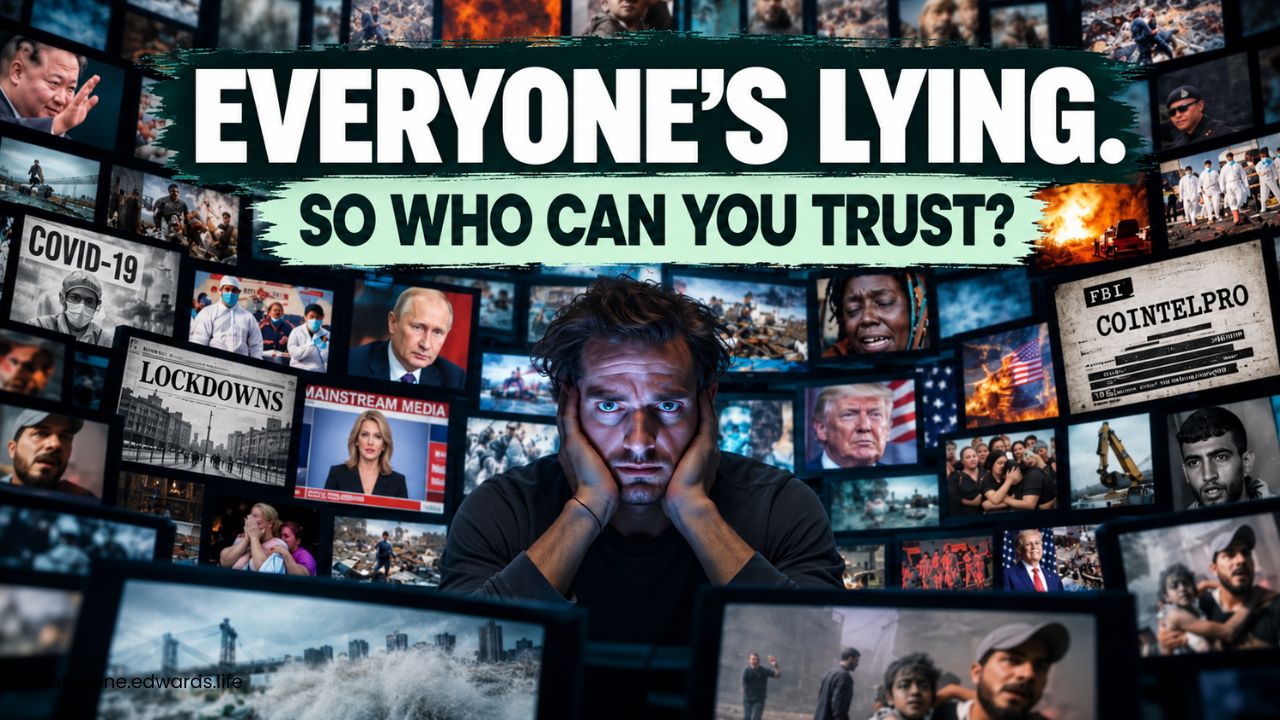
Who Can You Trust? Critical Thinking in an Age of Misinformation
The trap of looking for someone to believe, rather than learning to evaluate claims.
Remember when we were told to trust the experts?
Then another expert appeared, saying the complete opposite.
Then someone dug up an old interview showing that the first expert had changed their mind.
And before you knew it, you'd spent three hours researching something you hadn't even intended to look into.
Sound familiar?
Welcome to the information age. We've got more information at our fingertips than any generation in history, yet somehow, we're still trying to work out what the hell is going on.
So today I want to pose a question:
What if the biggest problem isn't that we don't know who to trust?
What if it's that we've become so accustomed to looking for someone to trust that we've forgotten how to think for ourselves?
Sometimes the conspiracy is real
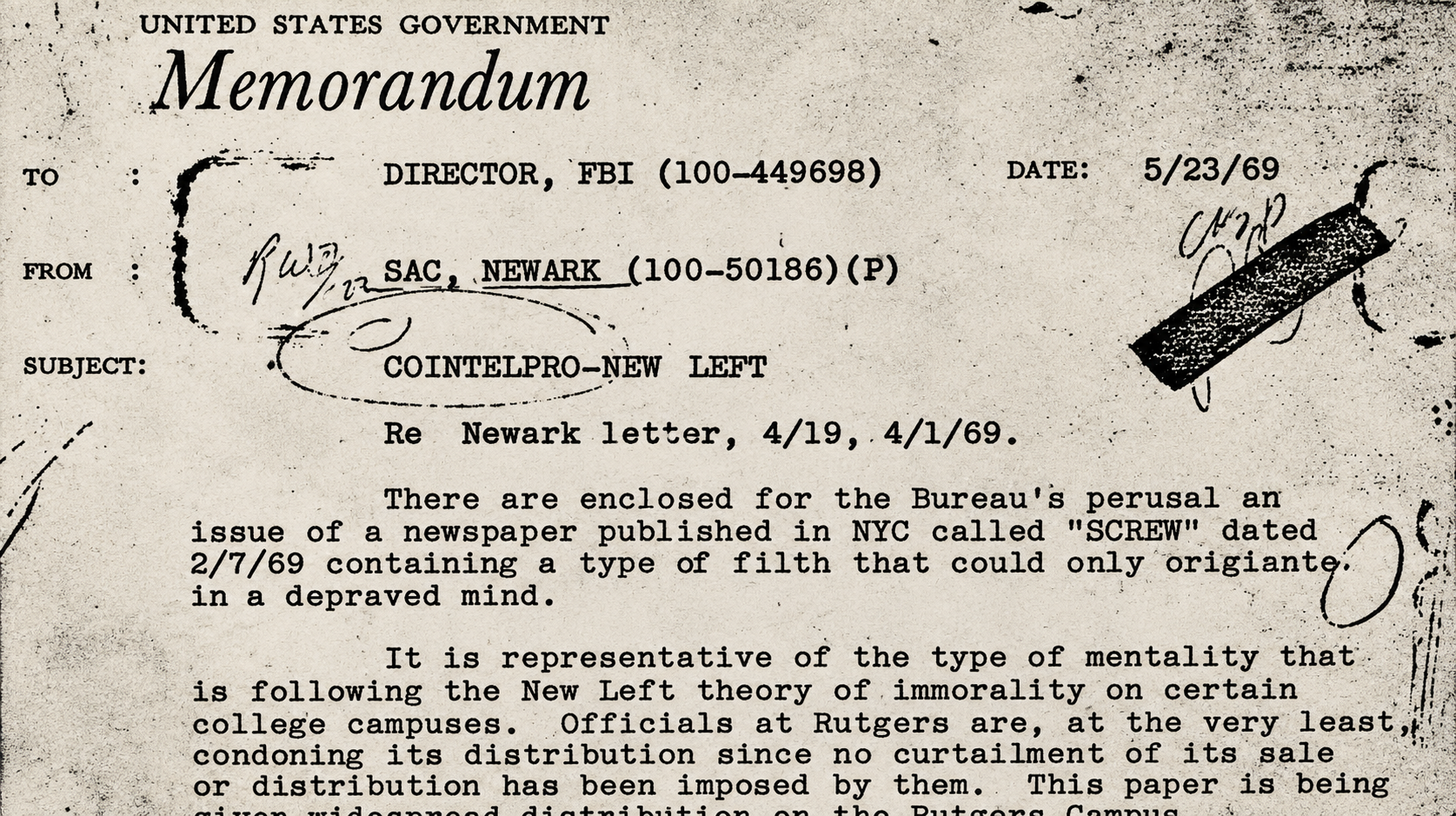
Take COINTELPRO.
Between 1956 and 1971, the FBI ran covert operations targeting political and activist organisations in America.
Agents infiltrated groups, encouraged internal conflict and attempted to discredit individuals and organisations.
This wasn't a theory invented by someone wearing a tinfoil hat.
It's documented history. The FBI itself acknowledges what happened.
Now think about that. If an organisation wants to undermine a group, it doesn't necessarily need to defeat its arguments.
Sometimes it just needs to get everyone fighting amongst themselves.
Of course, that doesn't prove every disagreement today is orchestrated 😉, but it should remind us that manipulation isn't something that exists only in Hollywood films.
Remember the COVID years?
We were told to follow the rules, trust the authorities and make enormous sacrifices for the greater good.
Meanwhile, some of the people involved in making and communicating those rules were attending gatherings that breached them.
The subsequent investigations confirmed serious failures of leadership and judgement at best. At worst? Something far more sinister: deliberate deception, calculated harm and, dare I say it, dastardly plans that put human lives at risk on an unimaginable scale. And personally, I'm far from convinced that incompetence explains it all.
You couldn't make it up.
Well, perhaps you could. But nobody would believe the script.
What's really fascinating is that when people discover they've been misled, they often swing from trusting authority completely to trusting absolutely nobody.
But blindly distrusting everything isn't independent thinking either.
It's just the opposite side of the same coin.
“Since when did questioning the official narrative mean we had to stop questioning the alternative one?”
The celebrity truth-teller problem
We've all seen it.
A charismatic commentator appears online, tells us things nobody else seems willing to discuss and quickly attracts a devoted following.
They might be right about some very important things, but often then people stop questioning anything they're saying.
Suddenly, challenging one of their claims is treated almost like an act of betrayal.
Hang on a minute.
Since when did questioning the official narrative mean we had to stop questioning the alternative one?
Someone can be right about one thing and spectacularly wrong about another.
They can expose genuine wrongdoing and still have their own agenda.
They can be intelligent, articulate and completely mistaken.
And so can we.
The behaviour nobody wants to examine
As a biologist and Behaviour Change Coach, I find this fascinating.
We like to believe we're making independent, rational decisions, but much of our behaviour is driven by familiar patterns.
Some people automatically trust authority.
Others automatically reject it.
Some need a recognised expert to tell them what to believe.
Others need their favourite alternative commentator to do exactly the same thing.
Different teams. Same dependency.

If someone else is doing all your thinking, how free are you really?
So who CAN you trust?
Perhaps we need to stop trying to find people who are always right.
Instead, we could start asking:
What exactly is being claimed?
Where is the evidence?
Does the person's behaviour match their words?
Perhaps most importantly, am I examining this information fairly, or simply looking for confirmation of what I already believe?
You don't need to have an opinion on everything.
You don't need to defend every person you've ever supported.
And you certainly don't need another three-hour YouTube marathon every time two people disagree.
Sometimes the most intelligent answer is:
“I don't know yet.”
Imagine that.
Four words that could save us all an extraordinary amount of time, energy and unnecessary arguments.
The goal isn't to trust everyone.
Or distrust everyone.
It's to become confident enough in your own judgement that you no longer need someone else to do your thinking for you.
That brings us to something even more uncomfortable.
What happens when the evidence challenges something we desperately WANT to believe?
In my next article, we'll explore cognitive dissonance, confirmation bias and why intelligent people can become remarkably skilled at defending ideas that no longer make sense.
Sometimes the hardest person to question isn't the expert on the television.
It's the one looking back at us in the mirror.
Question more. Learn more. Live better.
For those of you ready to make changes in YOUR life: You can see through other people’s agendas, but can you recognise the unconscious behaviours influencing your own decisions?
Awareness is powerful. But awareness without action changes very little.
I have just a few private coaching places remaining for 2026 for women who are ready to stop overthinking, second-guessing themselves and repeating the same self-sabotaging patterns.
10 weeks. Personalised. Focused on real behavioural change.
Catherine Edwards